
Asteroid Mining: Can Space Rocks Solve Earth's Resource Problems?
As the global population continues to grow and technological advancements push the boundaries of resource consumption, the quest for sustainable solutions to Earth's resource problems intensifies. One of the most intriguing proposed solutions lies beyond our planet—in the vast expanse of space. Asteroid mining, the process of extracting valuable materials from asteroids, has emerged as a potential strategy to alleviate resource shortages on Earth.
Understanding Asteroids
What Are Asteroids?
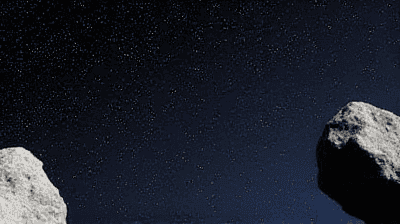
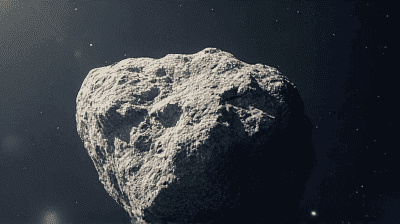
Asteroids are small, rocky bodies that orbit the Sun, primarily found in the asteroid belt between Mars and Jupiter. They vary in size, shape, and composition, ranging from a few meters to hundreds of kilometers in diameter. Asteroids are remnants from the early solar system, offering insights into the conditions and processes that shaped its formation.
Types of Asteroids
Asteroids can be classified into three main types based on their composition:
C-type (Carbonaceous): These asteroids are rich in carbon and are dark in appearance. They are believed to contain clay and organic compounds and are thought to be among the oldest objects in the solar system.
S-type (Silicaceous): Composed primarily of silicate minerals and metallic iron, S-type asteroids are brighter and more reflective than C-types. They are thought to be the remnants of larger bodies that underwent differentiation.
M-type (Metallic): These asteroids are primarily composed of metallic elements such as iron and nickel, making them potentially valuable targets for mining operations.
The Potential of Asteroids
Some scientists estimate that there are over a million known asteroids in our solar system, and a significant number of them could contain valuable resources, including precious metals, water, and other essential materials. This potential has sparked interest in asteroid mining as a viable way to supplement Earth's dwindling resources.
The Case for Asteroid Mining
Resource Scarcity on Earth
As Earth’s population grows and industries expand, the demand for natural resources continues to rise. Essential materials such as metals, rare earth elements, and water are becoming increasingly scarce. Traditional extraction methods are often environmentally damaging and may lead to the depletion of local resources. The need for alternative sources of these materials has never been more pressing.
Benefits of Asteroid Mining
Asteroid mining offers several compelling advantages:
Resource Abundance: Many asteroids are believed to contain significant amounts of metals and other materials. For example, a single metallic asteroid could contain billions of dollars' worth of precious metals like gold, platinum, and rare earth elements.
Environmental Impact: Extracting resources from space could reduce the environmental degradation associated with terrestrial mining. It may help to preserve sensitive ecosystems on Earth and mitigate pollution and habitat destruction.
Water in Space: Water is a critical resource for sustaining life and supporting space missions. Ice-capped asteroids, particularly in the outer solar system, may hold vast quantities of water that could be used for drinking, agricultural, or even fuel purposes.
Economic Growth: The development of a space mining industry could spur economic growth, create jobs, and foster innovation in spacecraft technology and materials processing.
The Technologies Behind Asteroid Mining
Current Technologies and Innovations
Asteroid mining is still in the conceptual phase, but advancements in technology are paving the way for future operations. Key areas of development include:
Spacecraft Design and Robotics: Unmanned spacecraft equipped with advanced robotic arms and drilling tools will be essential for asteroid mining. These vehicles must be capable of navigating the harsh conditions of space and the unique gravitational fields of asteroids.
Prospecting Tools: Effective prospecting methods will be crucial for identifying the most valuable asteroids. Spectroscopic analysis and imaging technologies can provide information about an asteroid's composition before a mining mission.
Material Processing: To extract resources efficiently, spacecraft will need to process materials on-site. Innovations in 3D printing and in-situ resource utilization (ISRU) could allow miners to refine materials into usable products directly in space.
Transportation and Logistics: Developing efficient methods for transporting mined materials back to Earth or to other destinations, such as space stations or lunar bases, will be vital for the success of asteroid mining operations.
Proposed Missions
Several organizations and space agencies are already preparing for future asteroid mining endeavors:
Planetary Resources: This private company aims to mine asteroids for precious metals and water. They have planned missions to prospect and potentially extract resources from near-Earth asteroids.
Deep Space Industries: Another private venture focused on developing technologies for asteroid mining. Their approach includes sending small spacecraft to target asteroids for resource assessment and potential mining.
NASA's Psyche Mission: NASA plans to send a spacecraft to the asteroid belt to study 16 Psyche, a metal-rich asteroid. This mission will provide valuable insights into the composition of asteroids and their potential for mining.
Challenges of Asteroid Mining
Despite its potential, asteroid mining faces various challenges that must be addressed:
Technical Challenges
Distance and Accessibility: Many asteroids are located far from Earth, making access a significant hurdle. Developing spacecraft capable of traveling to these distant locations will require advanced propulsion systems and navigation technologies.
Microgravity Environment: The low gravity of asteroids presents unique challenges for mining operations. Equipment must be designed to function effectively in microgravity and secure materials as they are extracted.
Material Processing: Efficiently processing materials in space will require innovative techniques. Developing systems for melting, refining, and shaping metals in a zero-gravity environment is a critical challenge for engineers.
Legal and Regulatory Issues
The current international legal framework governing space operations is still evolving, and asteroid mining raises several legal questions:
Ownership Rights: Determining who owns the rights to mine an asteroid and the extracted resources is a complex issue. The Outer Space Treaty of 1967, which governs space activities, states that no nation can claim sovereignty over celestial bodies. This raises questions about the property rights of private companies pursuing asteroid mining.
Environmental Concerns: Just as terrestrial mining can have detrimental effects on ecosystems, asteroid mining may also pose risks, albeit different ones. Ensuring that space activities do not harm celestial bodies or the broader space environment will require careful regulation and oversight.
International Cooperation: Effective regulatory frameworks will necessitate collaboration among nations to establish guidelines for responsible and sustainable mining practices in space.
Economic Viability
The economic feasibility of asteroid mining is still uncertain:
High Initial Costs: The costs associated with developing the technology, launching missions, and conducting mining operations are significant. Companies must demonstrate that the potential rewards outweigh the expenses.
Market Demand: The success of asteroid mining hinges on market demand for the extracted materials. Fluctuations in commodity prices could impact the profitability of such ventures.
Technological Advancements: As technology progresses, the costs of space travel and resource extraction may decrease, making asteroid mining a more attractive investment.
The Future of Asteroid Mining
A New Era of Space Exploration
Asteroid mining represents the dawn of a new era in space exploration and resource utilization. As technology advances and our understanding of the solar system deepens, the dream of mining asteroids may become a reality.
Potential Impacts on Earth
Resource Abundance: Successfully extracting resources from asteroids could alleviate shortages of critical materials on Earth, reducing dependence on terrestrial mining.
Global Cooperation: The pursuit of asteroid mining may foster international collaboration in space, promoting peaceful uses of outer space and shared scientific goals.
Sustainability: By turning to the cosmos for resources, humanity can reduce its ecological footprint on Earth and move toward a more sustainable future.
Preparing for the Challenges Ahead
While asteroid mining offers exciting possibilities, it also requires careful planning and coordination. Continued research in space technology, legal frameworks, and economic models will be essential to navigate the complexities of this emerging field.
Conclusion
Asteroid mining holds immense potential to provide solutions to Earth’s resource challenges, offering access to a wealth of materials that could support sustainable growth and technological advancement. As we set our sights on the asteroids scattered throughout our solar system, the hope is that we can tap into their treasures, ensuring a prosperous future for generations to come.
The journey toward asteroid mining is fraught with challenges, but it also represents a remarkable opportunity for exploration and innovation. By embracing collaborative efforts and investing in technology, humanity can open a new chapter in its quest for resources, establishing itself as a multi-planetary civilization that looks not only to the stars but also to the asteroids that lie beyond.
-
 Astronomy
White Holes: The Hypothetical Twin of Black Holes That Spits Matter Out
In the realm of theoretical physics and astronomy, the imagination often stretches into the unknown, leading to the development of concepts that challenge our understanding of the universe. Among these fascinating concepts is the idea of white holes, the hypothetical counterparts to black holes. While black holes are infamous for their ability to trap everything that crosses their event horizon, white holes are theorized to do the opposite: they expel matter and energy into the universe.
-
 Astronomy
The Kuiper Belt's Secrets: What New Horizons Found Beyond Pluto
The Kuiper Belt, a vast region of icy bodies beyond the orbit of Neptune, has long intrigued astronomers and planetary scientists. Home to a diverse collection of objects, including dwarf planets, comets, and potential new worlds, the Kuiper Belt offers a unique window into the early solar system. The exploration of this distant region gained significant momentum with the historic flyby of NASA's New Horizons spacecraft in 2015, which delivered the first close-up images and data from Pluto and its moons. However, the mission did not end there; it continued its journey deeper into the Kuiper Belt, revealing secrets about its structure, composition, and the origins of our solar system.
-
 Astronomy
The Great Attractor: The Mysterious Force Pulling Our Galaxy at 14 Million MPH
In the vastness of the universe, galaxies are in a dynamic ballet, influenced by the gravitational forces exerted by one another and by unseen structures. One of the most intriguing cosmic phenomena is a gravitational anomaly known as the Great Attractor. This mysterious region exerts a powerful influence on our galaxy, the Milky Way, and many other galaxies in its vicinity, pulling them toward it at incredible speeds. The Great Attractor is an enigmatic force that scientists are still working to fully understand, raising questions about the large-scale structure of the universe, the nature of gravity, and the composition of the cosmic fabric.
-
 Astronomy
Dark Matter Hunt: The Cutting-Edge Experiments Trying to Catch the Universe's Ghost
In the vast cosmos, a mysterious substance eludes direct detection while profoundly influencing the structure and evolution of the universe. This elusive entity is known as dark matter, a form of matter that does not emit, absorb, or reflect light, making it invisible to traditional observational techniques. Despite its ghostly presence, dark matter is believed to constitute approximately 27 percent of the universe's total mass-energy content. Understanding dark matter is one of the foremost challenges in modern astrophysics and cosmology.
-
 Astronomy
Satellite Swarms: How Mega-Constellations Are Changing Astronomy Forever
In recent years, the night sky has begun to look different than it ever has before. The proliferation of satellite swarms—groups of satellites operating together for various purposes—has profoundly transformed the field of astronomy and our understanding of the universe. These mega convolutions of satellites not only revolutionize how we observe and analyze astronomical phenomena, but they also present new challenges and opportunities for researchers and enthusiasts alike.
-
 Astronomy
The Fate of the Universe: Heat Death, Big Rip or Big Crunch?
The universe is an expansive and enigmatic entity that has fascinated humanity for millennia. As we delve deeper into the cosmos, we confront fundamental questions about its origins, behavior, and eventual fate. While our understanding of the universe's beginnings is grounded in the Big Bang theory, theories concerning its ultimate fate—whether it will end in heat death, a Big Rip, or a Big Crunch—remain at the forefront of cosmological research.
Hot Posts
-

Best Practices for Disposing of Pet Waste: Keeping Your Home and Community Clean
-

Insurance Premiums Explained: Factors that Affect Your Coverage Cost
-

The Environmental Impact of Food Waste: Why Proper Disposal Matters
-

Top 10 Foods You Should Never Dispose of in Your Garbage Disposal
-

Types of Insurance: Exploring Coverage Options for Different Needs
-

Why Subscription Boxes Are the Future of Retail