
The Kuiper Belt's Secrets: What New Horizons Found Beyond Pluto
The Kuiper Belt, a vast region of icy bodies beyond the orbit of Neptune, has long intrigued astronomers and planetary scientists. Home to a diverse collection of objects, including dwarf planets, comets, and potential new worlds, the Kuiper Belt offers a unique window into the early solar system. The exploration of this distant region gained significant momentum with the historic flyby of NASA's New Horizons spacecraft in 2015, which delivered the first close-up images and data from Pluto and its moons. However, the mission did not end there; it continued its journey deeper into the Kuiper Belt, revealing secrets about its structure, composition, and the origins of our solar system.

Understanding the Kuiper Belt
What is the Kuiper Belt?
The Kuiper Belt is a circumstellar disc located beyond the orbit of Neptune, roughly between 30 and 55 astronomical units (AU) from the Sun. One astronomical unit is the average distance from the Earth to the Sun, about 93 million miles or 150 million kilometers. This region is populated by a variety of small icy bodies, ranging from comets to dwarf planets, and is thought to contain remnants from the solar system's formation.
Composition and Structure of the Kuiper Belt
The objects in the Kuiper Belt are primarily composed of ice, rock, and other volatile compounds. This composition provides vital clues about the conditions and processes present during the early solar system. The Kuiper Belt is home to several notable objects, including:
Dwarf Planet Pluto: Once considered the ninth planet of our solar system, Pluto was reclassified as a dwarf planet in 2006. Nevertheless, it remains one of the most studied bodies in the Kuiper Belt.
Eris: Another dwarf planet that is slightly larger than Pluto, Eris was discovered in 2005 and is known for its highly elliptical orbit.
Haumea and Makemake: These are additional dwarf planets located in the Kuiper Belt, each having unique characteristics that enhance our understanding of celestial bodies in this region.
Other Kuiper Belt Objects (KBOs): Thousands of smaller KBOs exist in this region, with varying sizes and eccentric orbits. Many of these objects are thought to be remnants from the early solar system, providing crucial insight into its formation and evolution.
The Formation of the Kuiper Belt
The Kuiper Belt is believed to have formed from the leftover material that did not coalesce into planets during the formation of the solar system. The gravitational influences of the giant planets, especially Neptune, played a significant role in shaping the orbits and distribution of Kuiper Belt objects. Studying these objects helps scientists understand the conditions of the early solar system, including its formation, evolution, and the processes that governed planetary development.
New Horizons: A Historic Mission
Mission Overview
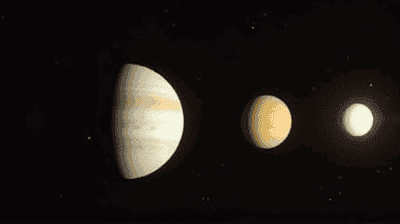
NASA's New Horizons mission was launched on January 19, 2006, with the primary goal of conducting a flyby of Pluto and its moons. After a swift journey of nearly a decade, New Horizons made its closest approach to Pluto on July 14, 2015, capturing stunning images and collecting invaluable data. However, the mission did not end there; it continued onward to study additional KBOs, marking it as the first spacecraft to explore this intriguing region in detail.
The Journey to Pluto and Beyond
New Horizons traveled through the gravitational influences of the outer planets, using a technique known as gravitational assist to boost its speed. This approach allowed the spacecraft to reach Pluto more quickly than traditional trajectories would permit. During its flyby of Pluto, New Horizons collected a wealth of data, including high-resolution images, surface composition analysis, and information about its atmosphere and moons.
Following the historic encounter with Pluto, New Horizons continued its journey into the Kuiper Belt, setting its sights on a KBO called 2014 MU69 (later named Arrokoth), which it encountered on January 1, 2019. This observation marked a groundbreaking moment in the exploration of the Kuiper Belt and expanded our understanding of these distant worlds.
Discoveries at Pluto
Pluto's Surprising Geological Features
New Horizons provided unprecedented details about Pluto's surface and geology, revealing a world far more dynamic and complex than previously imagined. Key discoveries included:
Sputnik Planitia: A vast, nitrogen-rich plain that appears to be a frozen sea of nitrogen ice. Its geometric patterns suggest that it is actively shaping the surface through processes such as convection.
Ice Mountains: Towering mountains made of water ice were discovered on Pluto, some reaching heights of up to 3,500 meters. These features indicate that Pluto has undergone significant geological activity in its recent past.
Atmospheric Studies: New Horizons also examined Pluto's thin atmosphere, which is primarily composed of nitrogen, with traces of methane and carbon monoxide. The presence of hazes and seasonal changes in atmospheric pressure were observed, suggesting an active climate system.
Moons of Pluto: The mission provided detailed images of Pluto's largest moon, Charon, revealing canyons and polar caps, and showcasing the dynamic relationship between the two bodies.
Insights into the Formation of Pluto
The data gathered by New Horizons has led to several hypotheses about Pluto's formation and evolution. The combination of geological features, atmospheric dynamics, and surface composition suggests that Pluto experienced both external impacts and internal geological processes. Studying these characteristics helps scientists understand the broader processes involved in the formation of icy bodies in the Kuiper Belt.
The Encounter with Arrokoth
Overview of Arrokoth
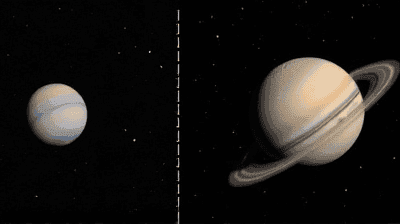
Following its encounter with Pluto, New Horizons turned its focus toward Arrokoth, a KBO located approximately 4 billion miles from Earth. Arrokoth, formerly designated 2014 MU69, is a contact binary composed of two lobes that are connected, resembling a 'snowman' shape. The object is estimated to be about 32 kilometers in diameter, making it one of the smallest bodies ever visited by a spacecraft.
Key Discoveries at Arrokoth
Surface Composition: New Horizons conducted detailed spectral analyses of Arrokoth's surface, revealing the presence of complex organic molecules, water ice, and other volatile compounds. These findings are significant as they suggest that the building blocks of life could be present in the outer solar system.
Geological History: The images captured by New Horizons indicated that Arrokoth has experienced minimal geological processes since its formation, preserving its primordial characteristics. This state offers a unique opportunity to study the conditions that existed during the early solar system.
Formation Insights: The two lobes of Arrokoth likely formed in a low-energy collision, which has implications for understanding the processes that formed larger celestial bodies in the solar system. The nature of this collision provides clues about the primordial conditions in the Kuiper Belt during the formation of planetary bodies.
The Kuiper Belt: Insights from New Horizons
The Diversity of Kuiper Belt Objects
One of the major revelations from the New Horizons mission is the diversity of KBOs beyond Pluto. The spacecraft's observations increase our understanding of various characteristics of these distant objects, including:
Color Variability: New Horizons discovered significant color variations among different KBOs, likely tied to varying surface compositions and the processes that have shaped these bodies over time.
Geological Features: Observations of KBOs have revealed a range of geological features, from craters to surface disturbances, indicating that some objects may have experienced impactful events or geological processes.
Population and Distribution: The mission has generated new data on the population size and distribution of KBOs, which is essential for understanding their dynamics and interactions within the Kuiper Belt.
The Kuiper Belt's Role in the Solar System
The data obtained by New Horizons emphasizes the importance of the Kuiper Belt in the context of solar system formation. By studying the diverse objects within this region, scientists can gain insights into the early material that shaped the planets and the processes that governed their development. The Kuiper Belt acts as a time capsule, preserving the remnants of the solar system's early history.
The Importance of Future Exploration
Ongoing Research and Analysis
The discoveries made by New Horizons have opened up numerous avenues for research in planetary science, astrobiology, and celestial mechanics. Ongoing analysis of the data collected by both the Pluto and Arrokoth encounters continues to yield new insights and refine our understanding of the solar system's origins.
Future Mission Opportunities
While New Horizons has completed its primary objectives, the wealth of data collected will fuel exploration and research for years to come. Additionally, future missions are essential for further investigating the Kuiper Belt:
Sample Return Missions: Proposals are being discussed for missions that could return samples from KBOs, allowing for more detailed laboratory analyses that can provide insights into their composition and potential for life.
Advanced Observations: Future spacecraft may be equipped with advanced cameras and spectrometers to study KBOs in even greater detail, revealing more about their formation, evolution, and possible habitability.
Surveying Additional KBOs: Ongoing observations through ground-based and space telescopes will continue to detect and characterize new KBOs, helping to map the population and distribution of these intriguing celestial objects.
Conclusion
The New Horizons mission has fundamentally transformed our understanding of the Kuiper Belt and its secrets. Through its groundbreaking data and observations, we have gained invaluable insights into Pluto, Arrokoth, and the myriad of icy bodies that make up this distant region of our solar system. The discoveries made by New Horizons highlight the complexity and diversity of the Kuiper Belt, offering a glimpse into the processes that shaped our solar system and potentially holding clues about the origins of life itself.
As we continue to explore the Kuiper Belt and its inhabitants, we push the boundaries of human knowledge and deepen our understanding of the cosmos. The secrets revealed by New Horizons are just the beginning of a broader exploration of the icy worlds that lie beyond Neptune, fostering our curiosity and excitement about what lies beyond the familiar vistas of our solar system.
-
 Astronomy
White Holes: The Hypothetical Twin of Black Holes That Spits Matter Out
In the realm of theoretical physics and astronomy, the imagination often stretches into the unknown, leading to the development of concepts that challenge our understanding of the universe. Among these fascinating concepts is the idea of white holes, the hypothetical counterparts to black holes. While black holes are infamous for their ability to trap everything that crosses their event horizon, white holes are theorized to do the opposite: they expel matter and energy into the universe.
-
 Astronomy
The Great Attractor: The Mysterious Force Pulling Our Galaxy at 14 Million MPH
In the vastness of the universe, galaxies are in a dynamic ballet, influenced by the gravitational forces exerted by one another and by unseen structures. One of the most intriguing cosmic phenomena is a gravitational anomaly known as the Great Attractor. This mysterious region exerts a powerful influence on our galaxy, the Milky Way, and many other galaxies in its vicinity, pulling them toward it at incredible speeds. The Great Attractor is an enigmatic force that scientists are still working to fully understand, raising questions about the large-scale structure of the universe, the nature of gravity, and the composition of the cosmic fabric.
-
 Astronomy
Dark Matter Hunt: The Cutting-Edge Experiments Trying to Catch the Universe's Ghost
In the vast cosmos, a mysterious substance eludes direct detection while profoundly influencing the structure and evolution of the universe. This elusive entity is known as dark matter, a form of matter that does not emit, absorb, or reflect light, making it invisible to traditional observational techniques. Despite its ghostly presence, dark matter is believed to constitute approximately 27 percent of the universe's total mass-energy content. Understanding dark matter is one of the foremost challenges in modern astrophysics and cosmology.
-
 Astronomy
Satellite Swarms: How Mega-Constellations Are Changing Astronomy Forever
In recent years, the night sky has begun to look different than it ever has before. The proliferation of satellite swarms—groups of satellites operating together for various purposes—has profoundly transformed the field of astronomy and our understanding of the universe. These mega convolutions of satellites not only revolutionize how we observe and analyze astronomical phenomena, but they also present new challenges and opportunities for researchers and enthusiasts alike.
-
 Astronomy
The Fate of the Universe: Heat Death, Big Rip or Big Crunch?
The universe is an expansive and enigmatic entity that has fascinated humanity for millennia. As we delve deeper into the cosmos, we confront fundamental questions about its origins, behavior, and eventual fate. While our understanding of the universe's beginnings is grounded in the Big Bang theory, theories concerning its ultimate fate—whether it will end in heat death, a Big Rip, or a Big Crunch—remain at the forefront of cosmological research.
-
 Astronomy
The Moon's Violent Birth: How Theia's Collision Created Our Lunar Companion
The Moon, Earth's only natural satellite, has captivated humanity for millennia. Its presence has inspired countless myths, legends, and artistic works, playing a crucial role in the cultural and scientific development of civilization. However, the Moon's origins are not simply a tale of celestial beauty; they are rooted in a violent history of cosmic collision. According to the leading hypothesis, known as the Giant Impact Hypothesis, the Moon was formed approximately 4.5 billion years ago as a result of a catastrophic collision between the early Earth and a Mars-sized body named Theia.
Hot Posts
-

Best Practices for Disposing of Pet Waste: Keeping Your Home and Community Clean
-

Insurance Premiums Explained: Factors that Affect Your Coverage Cost
-

The Environmental Impact of Food Waste: Why Proper Disposal Matters
-

Top 10 Foods You Should Never Dispose of in Your Garbage Disposal
-

Types of Insurance: Exploring Coverage Options for Different Needs
-

Why Subscription Boxes Are the Future of Retail